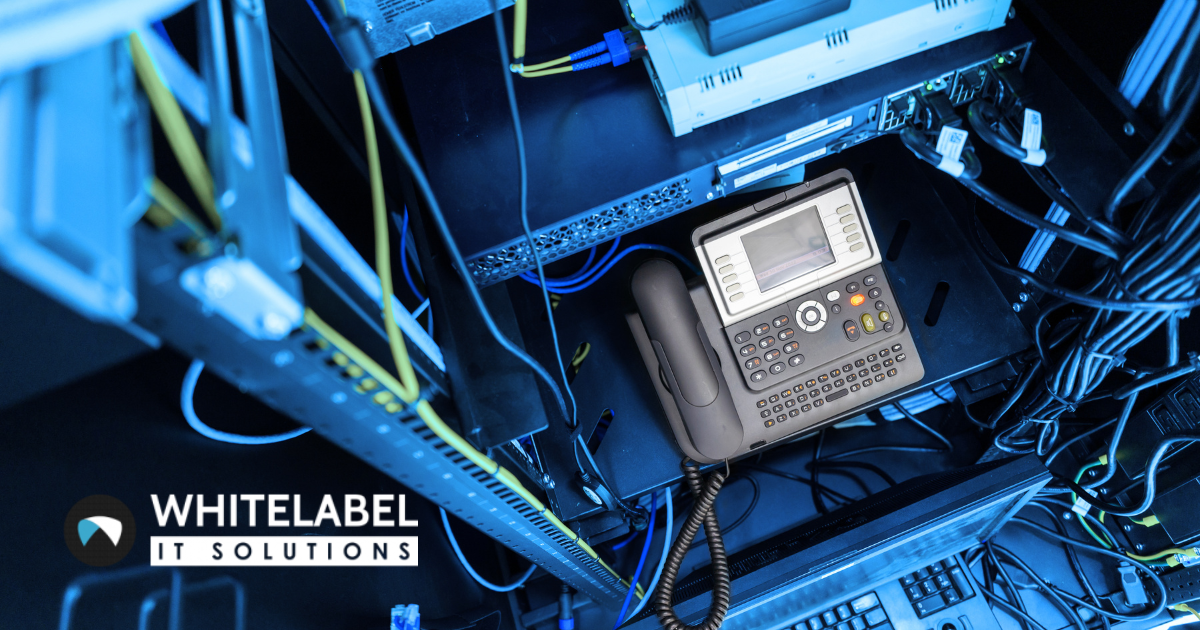
Why VoIP Providers Are Moving to BareMetal Servers for VOIP
In VOIP, call quality isn’t a feature—it’s the entire business. When packets stumble, calls drop. When latency spikes, customers walk. And when a provider finally finds a network that just works, they stay.
That’s exactly why so many VOIP teams are moving their infrastructure to BareMetal servers for VOIP. It’s not a trend. It’s a response to the industry’s biggest ongoing pain point: stability.
One VOIP provider summarized their experience with us this way:
“In 20 years in VOIP, I’ve never seen a carrier blend this effective in minimizing packet loss and latency.”
That’s the expectation now—and that’s what we build for.
The Low-Latency Advantage of Tier-1 Carrier Connectivity
Anyone can advertise “fast speeds.” VOIP doesn’t care about speed—it cares about consistency.
The real differentiator is the route your packets take.
With direct connectivity to Tier-1 carriers such as Verizon and Comcast, VOIP traffic takes the cleanest possible path. No unnecessary hops, no unpredictable detours, and no reliance on third-party middlemen who introduce jitter.
VOIP providers switching to our network immediately notice:
- Clean, artifact-free call quality
- Steady latency, even during peak usage
- Packet loss that drops to near-zero
One customer called it “the best network in the metro area,” and that’s not an exaggeration—Tier-1 routing makes VOIP behave the way it always should have.
BareMetal Servers Built for Providers Who Obsess Over Quality
VOIP professionals operate in milliseconds. They measure everything. They don’t compromise.
That’s why dedicated hardware makes such a significant difference:
- Unshared CPU: Perfect for SIP handling, transcoding, and call processing.
- Environment control: Fine-tune performance without virtualization noise.
- Predictable uptime: Essential when VOIP is your business.
Pair that with a low-latency network blend, and the result is crystal-clear call quality your customers can hear.
A Network Designed to Reduce Packet Loss—Not Just Mask It
Some networks try to hide instability behind routing tricks. VOIP always uncovers the truth.
Our approach eliminates the problem at its foundation:
- Tier-1 carrier diversity ensures the cleanest route is always available.
- Routing prioritization treats VOIP like the mission-critical traffic it is.
- Zero-congestion design ensures stability during sudden demand spikes.
The outcome: routing behavior that VOIP providers genuinely feel in real-world usage.
Real-World Validation: A VOIP Provider’s 20-Year Benchmark
After nearly a year of monitoring our network, one veteran VOIP operator moved their entire primary infrastructure to us. Their conclusion was simple:
“Your direct peer connectivity reduced latency and packet loss where others couldn’t.”
And they added what might be the highest compliment in VOIP operations:
“I pay your invoice each month with joy.”
That’s what happens when VOIP isn’t treated as an afterthought—it’s treated as a performance priority.
Why Clients and VoIP Companies stay
Migration solves today’s problem. Staying means the problem doesn’t return.
VOIP companies stay with us because they get:
- Performance that doesn’t fluctuate
- Stability during metro-area traffic surges
- A network team that prioritizes quality over shortcuts
- BareMetal infrastructure engineered for scale
They don’t stay because of marketing. They stay because they can hear the difference.
Designed for VOIP—Not Adapted for It
When you combine BareMetal servers for VOIP with Tier-1 connectivity, call quality isn’t just good—it’s predictably excellent.
Providers describe the before-and-after experience the same way:
- “Cleaner.”
- “Faster.”
- “More stable.”
- “A different class of performance.”
That’s the standard VOIP deserves.
Final Takeaway
If VOIP drives your business, your infrastructure can’t rely on generic hosting.
It demands a network built specifically to carry voice.
BareMetal servers for VOIP—paired with Tier-1 routing—set a higher standard for clarity, stability, and uptime that end users immediately recognize.
Learn more, here!